
Criminal Court Records in Saguache County
A criminal court record is the case-level record kept by the court after charges are filed. It is different from an arrest record, sheriff booking record, jail custody lookup, or warrant inquiry. The court record may begin with a complaint, summons, ticket, information, indictment, or felony complaint, then continue through advisement, bond, plea, motions, hearings, disposition, sentencing, restitution, probation, and later review events.
Saguache County is served by the Saguache Combined Court in Colorado's 12th Judicial District. District court handles felony criminal cases. County court handles misdemeanors, traffic infractions, and felony complaints before transfer or bindover. Municipal courts handle town ordinance and municipal traffic matters. If a person is looking for the charge itself rather than the whole case file, the more focused topic is arrest records and court charges. If the question is whether someone is currently in custody, use inmate records or the sheriff app channel instead.
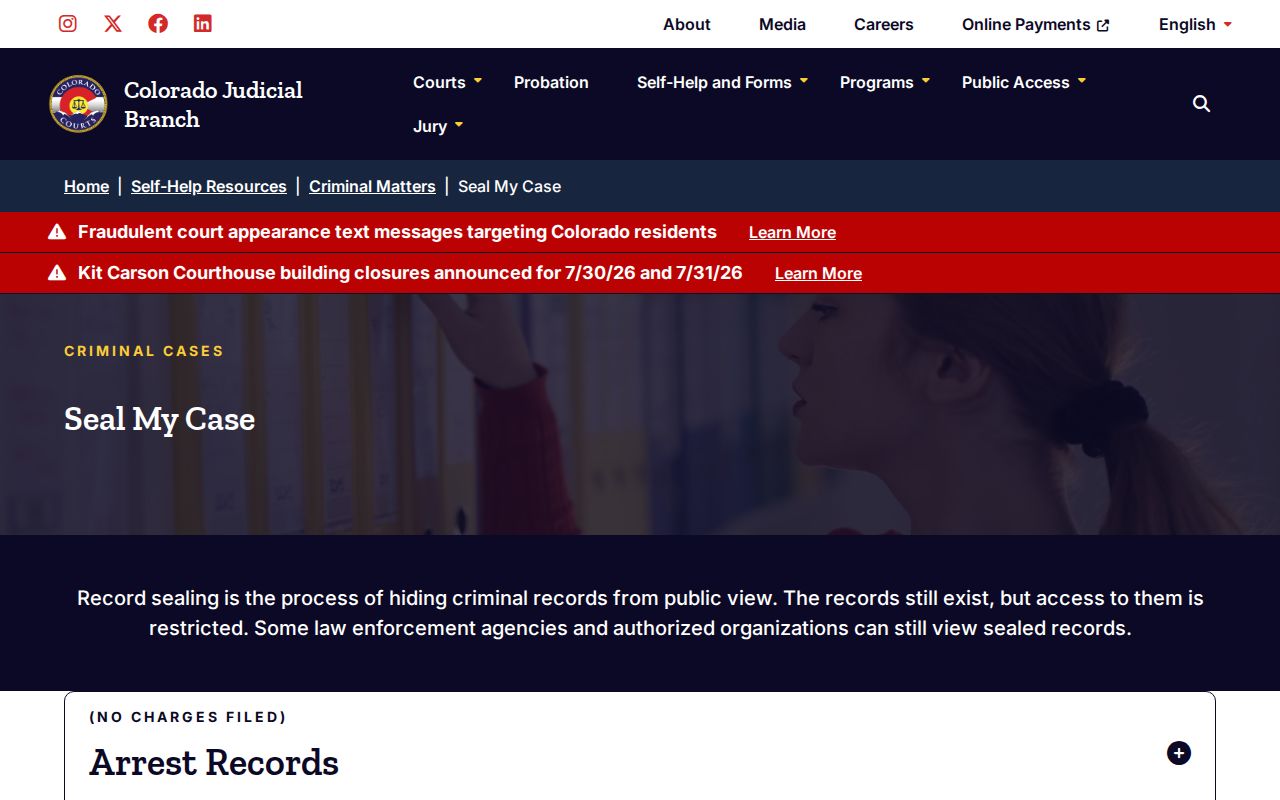
Colorado Judicial Branch sealing resources are the starting point for criminal record visibility questions: Seal My Case.
How to Search Saguache County Criminal Court Records
The main online starting point is the Colorado Judicial Branch Docket Search. Narrow the location to 12th Judicial District, Saguache County, and Saguache Combined Court. Use District for felony criminal cases, County for misdemeanor and lower criminal matters, or Both if the exact level is unclear.
- Open the Colorado Judicial Branch Docket Search.
- Set the location filters to 12th Judicial District, Saguache County, and Saguache Combined Court.
- Select County, District, or Both for court type.
- Use the case-number fields if known. Criminal cases commonly use the CR case class, while misdemeanor or traffic-related classes may appear depending on the filing.
- If no case number is known, search by defendant first and last name, business name if applicable, attorney name, or attorney bar number.
- Read the docket events for advisement, bond, arraignment, plea, motions, disposition, sentence, restitution, probation, warrant, and payment entries.
- Request the full criminal case file or certified copies from the Saguache Combined Court clerk when the docket listing is not enough.
For general court records, the same search tool covers civil, domestic, probate, traffic, water, and other classes. For active warrant concerns, use the issuing court or warrant records channels because docket entries may not prove current warrant status.
Stages of a Criminal Case
The criminal case file grows as the case moves through court. Early entries often show charges, advisement, bond, counsel, and next setting. Later entries may show plea negotiations, motions, trial settings, dismissal, conviction, sentence, probation, restitution, payment, or review hearings.
Case flow: Charges Filed › Advisement / Bond › Arraignment › Pretrial / Motions › Plea or Trial › Disposition › Sentencing › Probation / Payment Review
| Stage | What Happens |
|---|---|
| Charges Filed | The district attorney or charging authority files the criminal allegation in county or district court. |
| Advisement / Bond | The court advises the defendant of rights, allegations, custody or release conditions, and next settings. |
| Arraignment | The charges are formally addressed and the defendant enters a plea or receives a plea deadline. |
| Pretrial / Motions | Attorneys file motions, request discovery, negotiate, and prepare for hearing or trial. |
| Plea or Trial | The case resolves by plea, dismissal, deferred disposition, bench trial, or jury trial. |
| Disposition | The record shows the outcome of each charge, such as guilty, dismissed, acquitted, amended, or deferred. |
| Sentencing | The court imposes jail, prison, probation, fines, costs, restitution, treatment, community service, or other terms. |
| Review | Later docket events may involve probation, payments, restitution, compliance, warrants, or sealing. |
What a Saguache County Criminal Court Record Shows
The full criminal case file contains more than a charge list. It is the official court path of the prosecution. Public access can be narrowed by sealing, juvenile rules, victim protections, protected addresses, financial redactions, or other confidentiality limits.
| Field | What It Shows |
|---|---|
| Case Number | The year, case class, and sequence used to locate the court file. |
| Court Location | 12th Judicial District, Saguache County, Saguache Combined Court, and County or District court. |
| Defendant | The person charged, with identifying details limited by court privacy rules. |
| Prosecutor | The district attorney or deputy district attorney handling the criminal prosecution. |
| Defense Counsel | Private counsel, public defender, or self-represented status if reflected in the court file. |
| Charges | Offense names, statutes, class or degree, filing date, amendments, and charge-level outcomes. |
| Bond / Custody | Release conditions, bond orders, custody-related hearings, or failures to appear when reflected in docket events. |
| Plea | Guilty, not guilty, no contest where applicable, deferred plea terms, or other plea entries. |
| Motions and Orders | Requests by parties and judge rulings on evidence, procedure, deadlines, or case management. |
| Disposition | The final or charge-level outcome, including conviction, dismissal, acquittal, amendment, or deferred result. |
| Sentence | Jail, prison, probation, treatment, community service, fines, costs, restitution, or payment obligations. |
| Redactions | Victim details, juvenile information, protected addresses, medical data, financial accounts, and sealed material are limited. |
Charges vs. Convictions
A charge is an accusation filed in court. A conviction is an outcome after a guilty plea, guilty verdict, or other conviction-producing disposition. Criminal court records may show charges that were dismissed, amended, deferred, or resolved without conviction, so the disposition field matters as much as the charge field.
| Charge | Conviction | |
|---|---|---|
| Meaning | An alleged criminal violation filed after arrest, summons, ticket, complaint, information, or indictment. | A court outcome based on plea, verdict, or qualifying disposition. |
| Timing | Appears near the start of the criminal case. | Appears after plea, trial, or other final resolution. |
| Record Use | Helps identify allegations and case path. | Shows final liability and sentencing consequences. |
| Possible Outcome | May be dismissed, amended, reduced, deferred, or tried. | May lead to sentencing, probation, fines, costs, restitution, and later sealing eligibility questions. |
| Public Access | Official-action charging information is generally more accessible than investigative records. | Public unless sealed, restricted, juvenile, or otherwise confidential. |
District Attorney and Public Defender Roles
Saguache County is served by the 12th Judicial District Attorney's Office, which covers Alamosa, Conejos, Costilla, Mineral, Rio Grande, and Saguache Counties. The DA decides whether and what state criminal charges to file, appears for the prosecution, may communicate with victims, and may publish press releases or data-dashboard information when public release is appropriate.
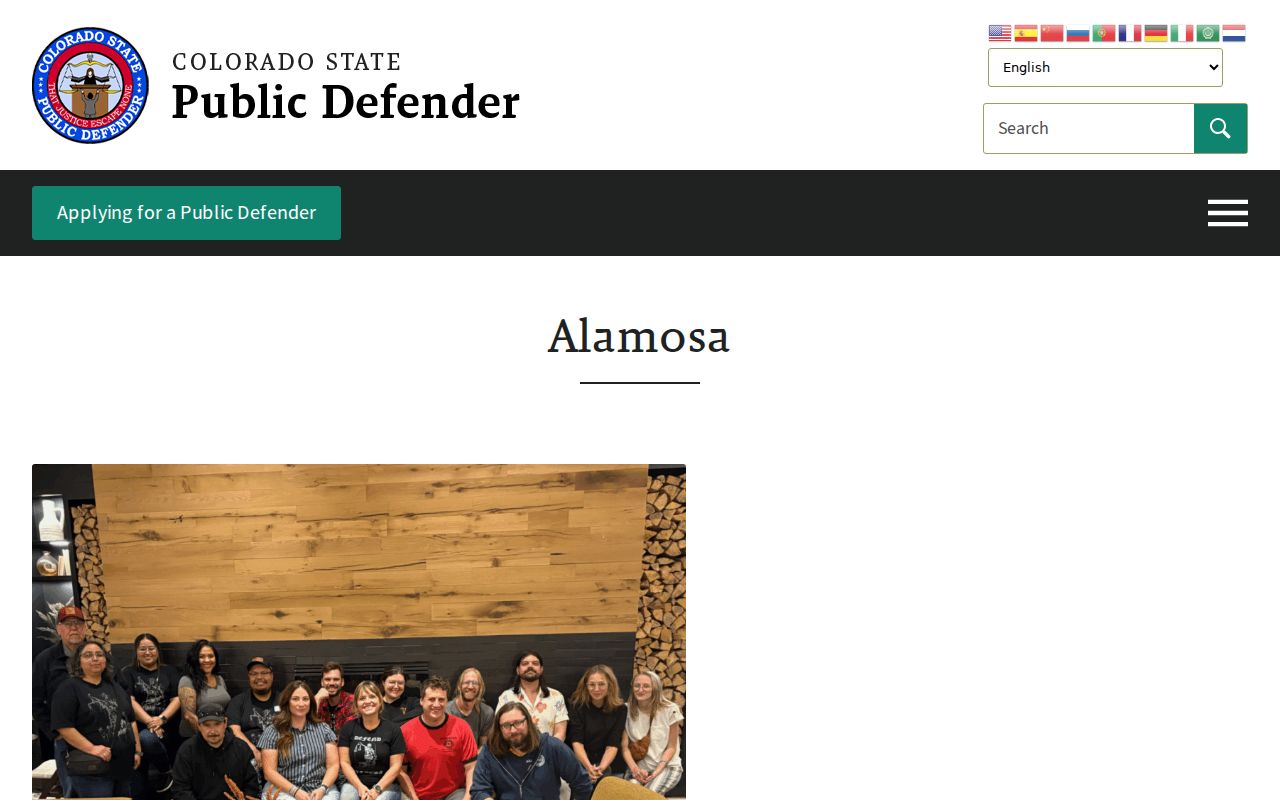
The Colorado State Public Defender office serving Saguache County is the Alamosa office. Public defender involvement is part of the court record when counsel is appointed or appears. The Judicial Branch public defender instructions identify JDF 208 for adults requesting a state-paid professional and JDF 219 for juvenile delinquency public defender applications. Out-of-jail applicants must complete the application, collect proof of income or documentation, and submit it to the proper office.
The prosecution office serving Saguache County is listed here: 12th Judicial District Attorney.
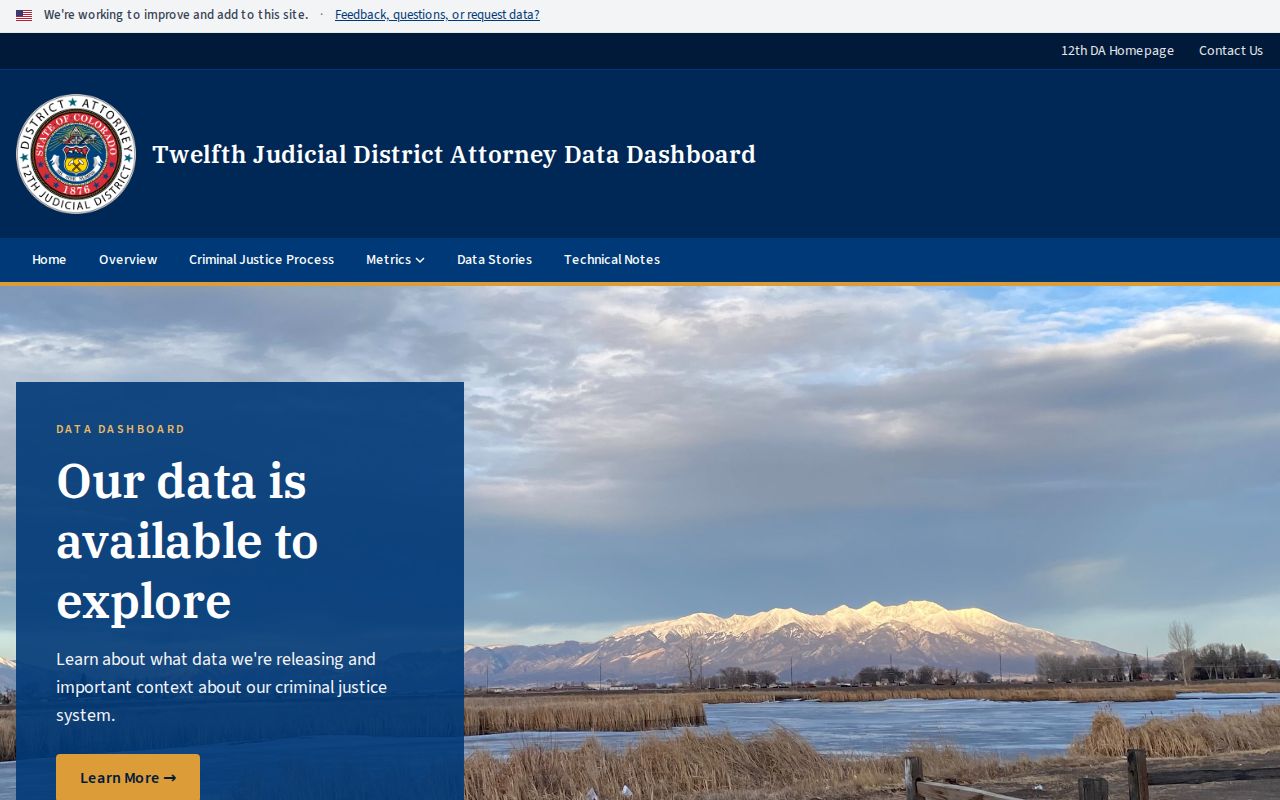
The DA's public data source is here: 12th Judicial District Attorney data dashboard.
Defense eligibility and local office contact are available through the state defender system: Alamosa Public Defender Office.
Sealed vs. Expunged Records
Colorado Judicial Branch materials explain sealing as hiding criminal records from public view while some law enforcement agencies and authorized organizations may still view them. Expungement is most often discussed in juvenile or special statutory contexts and can remove or heavily restrict public access depending on eligibility and offense type.
| Sealed | Expunged | |
|---|---|---|
| Public Visibility | Hidden or restricted from ordinary public access. | Removed or specially restricted from public access under eligible procedures. |
| Record Existence | The record still exists in government systems. | The record may be treated as unavailable or specially restricted depending on the statute. |
| Common Use | Eligible arrests, non-convictions, municipal records, convictions, or automatic-sealing categories. | Often juvenile-related or specific statutory categories. |
| Who May Still See It | Law enforcement or authorized agencies may still have access. | Access is narrower and depends on the expungement rule. |
| Local Filing Path | Use Colorado Judicial Branch forms and file in the court where the case or arrest-related record belongs. | Use the specific juvenile or statutory procedure that applies to the record type. |
Public Access to Criminal Court Records
Criminal court records are governed by Colorado Judicial Branch public-access rules when the record is a court file. Criminal justice records outside the court file, such as law-enforcement investigative materials, are handled under CCJRA. The Colorado Attorney General's CORA and CCJRA summary explains that official-action criminal justice records include arrest, indictment, charging by information, disposition, custody release, and probation or parole decisions.
Key Authorities:
Colorado Judicial Branch CJD 05-01 / Public Access to Information and Records Rule - court-system records are open for inspection at reasonable times as provided by Judicial Branch rules.
Colorado Criminal Justice Records Act, C.R.S. 24-72-301 et seq. - official-action criminal justice records are generally open, while other criminal justice records may be discretionary or restricted.
Background Check Considerations
A public criminal docket lookup is not the same thing as a regulated employment, housing, credit, tenant, insurance, or licensing background check. A court record may show a charge without a conviction, a disposition that changed the charge, or a sealed case that no longer appears to the public. Anyone using criminal court data for a regulated decision should use lawful, compliant screening channels and verify results with the originating court.
Important: This site is not a consumer reporting agency and court lookup results should not be used for FCRA-regulated decisions.
Restricted Criminal Court Records in Saguache County
Restricted criminal court material can include sealed cases, juvenile delinquency records, victim information, protected addresses, mental health or treatment records, Social Security numbers, financial account numbers, minor identities, and sensitive materials covered by a court order. Search forms may list juvenile case classes, but public results can be limited or unavailable.
For sealing, start with the Judicial Branch Seal My Case page rather than the County Clerk and Recorder. Determine whether the matter is an arrest with no charges filed, a dismissed or acquitted case, a municipal case, a conviction, or an automatic-sealing category. Some offenses are excluded, some require waiting periods, and some require a verified criminal history and custodian list. The Clerk of Court is the local filing contact for Saguache court matters, but clerk staff cannot provide legal advice.