
Probate Division of District Court
Probate in Saguache County is handled by the District Court through Saguache Combined Court. The official research identifies the correct local name as Probate Division of District Court, not a separate elected county probate court. The County Clerk and Recorder page also warns users that probate questions belong to the Clerk of the Courts, not the County Clerk and Recorder.
Probate record categories include decedent estates, informal probate, formal probate, wills, appointment of personal representative, letters, notices to creditors, inventories, accountings, distributions, trusts that require court action, guardianships, and conservatorships. District court also handles mental health and juvenile matters, so guardianship and conservatorship files can overlap with restricted medical, incapacity, minor, or financial information.
Probate Court Contact
Use the court clerk for PR case searches, probate filing questions, copy requests, and questions about whether a document is public, redacted, or restricted. Clerk staff can provide filing and records access information, but legal advice must come from an attorney or self-help source.
Saguache Combined Court
Probate Division of District Court
501 4th Street, P.O. Box 197
Saguache, CO 81149
719-655-2522
saguacheclerk@judicial.state.co.us
Monday-Friday, 8:00 a.m.-4:00 p.m.
Probate Terms Defined
Probate records use terms that describe the person who died, the person seeking authority, and the type of court control involved. These definitions help separate estate files from guardianship and conservatorship matters.
- Probate
- Court process for estates, wills, guardianships, and conservatorships.
- Estate
- The property, debts, and rights handled after a person's death.
- Will
- A document stating how property should be distributed after death.
- Personal representative
- The person appointed to administer an estate and act for it.
- Letters
- Court-issued proof that a personal representative, guardian, or conservator has authority.
- Guardianship
- Court authority over personal care decisions for a protected person.
- Conservatorship
- Court authority over a protected person's finances.
- Inventory
- A listing of estate or protected-person assets filed or maintained as part of administration.
How to Search PR Probate Cases
The Colorado Judicial Branch docket search is the practical public search path for Saguache County probate case information. The docket-search case-class dropdown includes PR, which is the probate case class. The public docket can help locate a case number, estate name, filing status, or hearing date, but it is not a full document-download system for wills, inventories, accountings, or letters.
- Open the Colorado Judicial Branch docket search.
- Select 12th Judicial District, Saguache County, and Saguache Combined Court if using location filters.
- Choose District or Both as the court type.
- Use case class PR when searching by case number or when looking for probate-class records.
- Search by party name. For estates, try the decedent's last name and first name.
- For guardianship or conservatorship matters, use names carefully because public access may be limited.
- If the needed document is not visible, contact the Saguache Clerk of Court for records request and copy options.
Estate, Guardianship, and Conservatorship Records
Estate files may include petitions, wills, orders, appointment paperwork, letters, notices to creditors, inventories, accountings, reports, distribution records, and closing documents. Trust matters appear only when court action is required. Some estate records are public, but access can still depend on the type of document, whether the file is sealed, and whether sensitive identifiers or financial information must be redacted.
Guardianship and conservatorship records have more access limits because they can involve protected persons, incapacity claims, medical evaluations, minors, financial account numbers, and private reports. Public docket information may exist while reports, evaluations, accountings, and protected-person details remain restricted. Mental health and juvenile overlaps should be treated as restricted unless the court says otherwise.
| Field | Public or restricted notes |
|---|---|
| Case number / case class PR | Public docket field if searchable. |
| Decedent / protected person / estate name | May be public for estates; protected-person matters may be restricted. |
| Filing date / status | Likely docket fields. |
| Personal representative / guardian / conservator | May appear in orders or letters; sensitive data may be redacted. |
| Will / inventory / accounting | May be requestable unless restricted; financial details may be redacted. |
| Hearing dates | Docket search may show public court events. |
Probate Filing and Administration Steps
Probate filing depends on the estate, the assets, whether a will exists, whether real property is involved, and whether anyone disputes authority or distribution. Small estates may have simplified affidavit options under Colorado law, while larger estates, disputes, or real property issues often require court filing. Saguache venue should be confirmed before filing when the decedent, heirs, property, or interested persons are connected to more than one county.
- Determine whether a probate case is necessary or whether a simplified small-estate option applies.
- Gather the death certificate, will if any, asset and debt information, heirs or devisees, and proposed personal representative information.
- Select the correct Colorado Judicial Branch probate forms for informal probate, formal probate, or another probate matter.
- File with Saguache Combined Court if venue belongs in Saguache County.
- Pay filing fees or request a fee waiver if eligible.
- Provide required notices to heirs, devisees, creditors, and interested persons.
- Obtain letters or a court appointment if approved.
- Inventory assets, manage creditor claims, file required reports or accounting if needed, and distribute assets.
- Close the estate after court and administration requirements are satisfied.
Real Estate Recording After Probate
The probate case and the land-record filing are different records. If a probate order, deed, personal representative document, or other estate-related instrument must be recorded for Saguache County real property, recording goes through the Saguache County Clerk and Recorder. The recording department processes and preserves documents presented for recording as public record, while the court controls the probate case file.
The Clerk and Recorder's recording page gives local rules that matter for probate-related real estate. Documents should be legible, include required margins, show a complete return address, and be recorded in the correct county. The office warns that documents recorded in the wrong county will not be rejected and recording fees will not be refunded. Packages with multiple document types may be rejected and returned for separation and resubmission.
Recorded-document access is described through the Clerk and Recorder and iCounty. Non-certified recorded document images from 9/1/1994 forward are available online, with older records being indexed periodically. Certified copies of recorded documents must come from the county clerk, not from iCounty.
The manifest source for recorded-document searching is iCounty recorded document search.
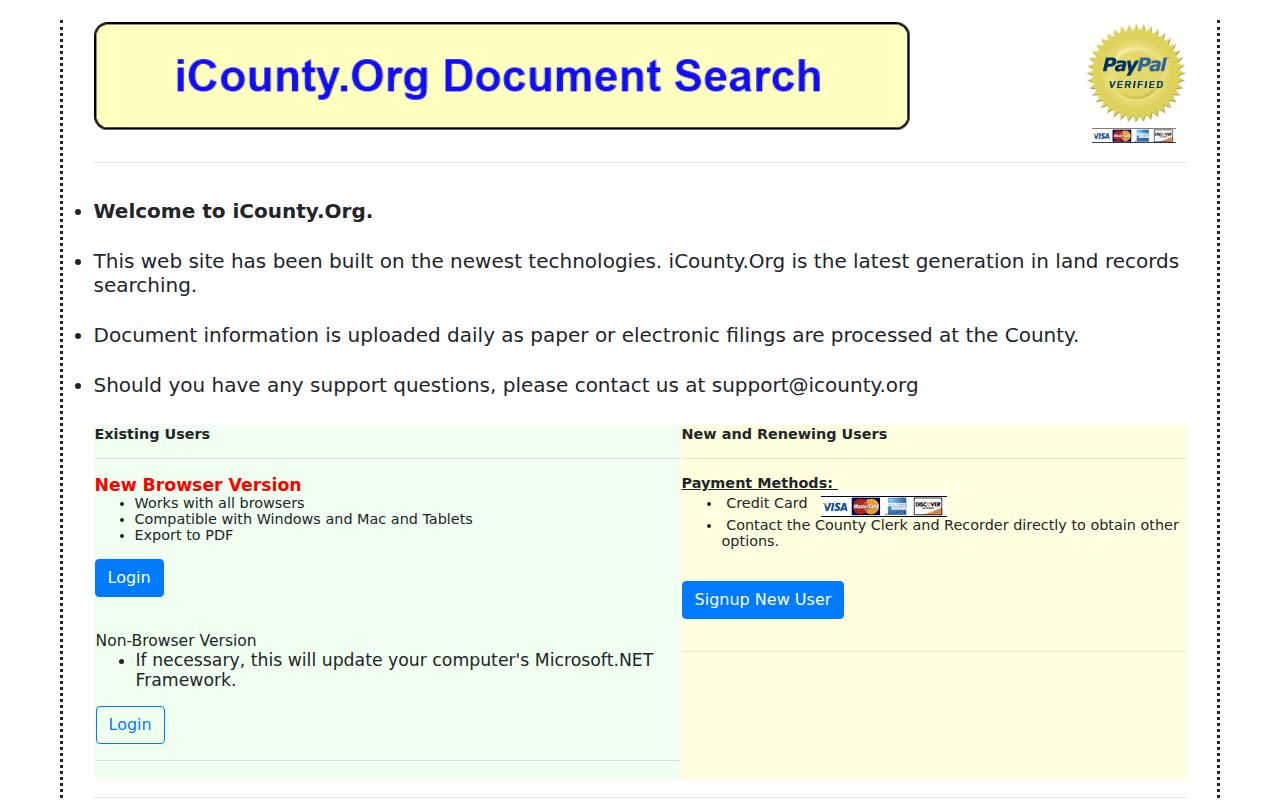
Use recorded-document search for deeds and land instruments after probate, while keeping PR case searches with the court.
Probate Filing and Copy Fees
Saguache-specific probate filing and certified court-copy fees were not located in the official county pages reviewed for the research. The court clerk or current Colorado Judicial Branch fee schedule should be used before filing or ordering court copies. Recording fees for estate-related real property documents are supported by the county recording research.
| Item | Fee |
|---|---|
| District court probate filing | [fee not located in Saguache-specific official sources; verify current Colorado Judicial Branch fee schedule] |
| Certified copies from court | [fee not located in Saguache-specific official sources; call Clerk of Court] |
| Recorded documents related to estate real property | County Clerk recording fee $43/document; copies $0.25/page; certification $1 plus $0.25/page |
Restricted Probate Material
Public access to probate material depends on the type of case and document. Estate dockets and some filings may be available, while protected-person reports, medical evaluations, financial account numbers, minor information, mental health material, and sealed filings may be restricted or redacted. A person searching for a guardianship or conservatorship file should expect narrower access than a person searching for a routine estate docket.
Colorado Judicial Branch public-access rules govern court-system records. CORA and CCJRA can be relevant to other public-record contexts, but court probate records should be requested through the Judicial Branch record path or the Saguache Clerk of Court. If the record is not visible in docket search, that does not mean no probate case exists; it may mean the search terms are incomplete, the case is older, or access is limited.
Water Court and Probate Are Separate
Saguache County sits in the Rio Grande Basin context, and Colorado has specialized water courts for water-rights and water administration matters. Water-court records are not probate records, but they can matter to estates that include agricultural land, wells, water rights, or real property affected by groundwater administration.
Colorado Judicial Branch explains specialized water jurisdiction on its water courts page.
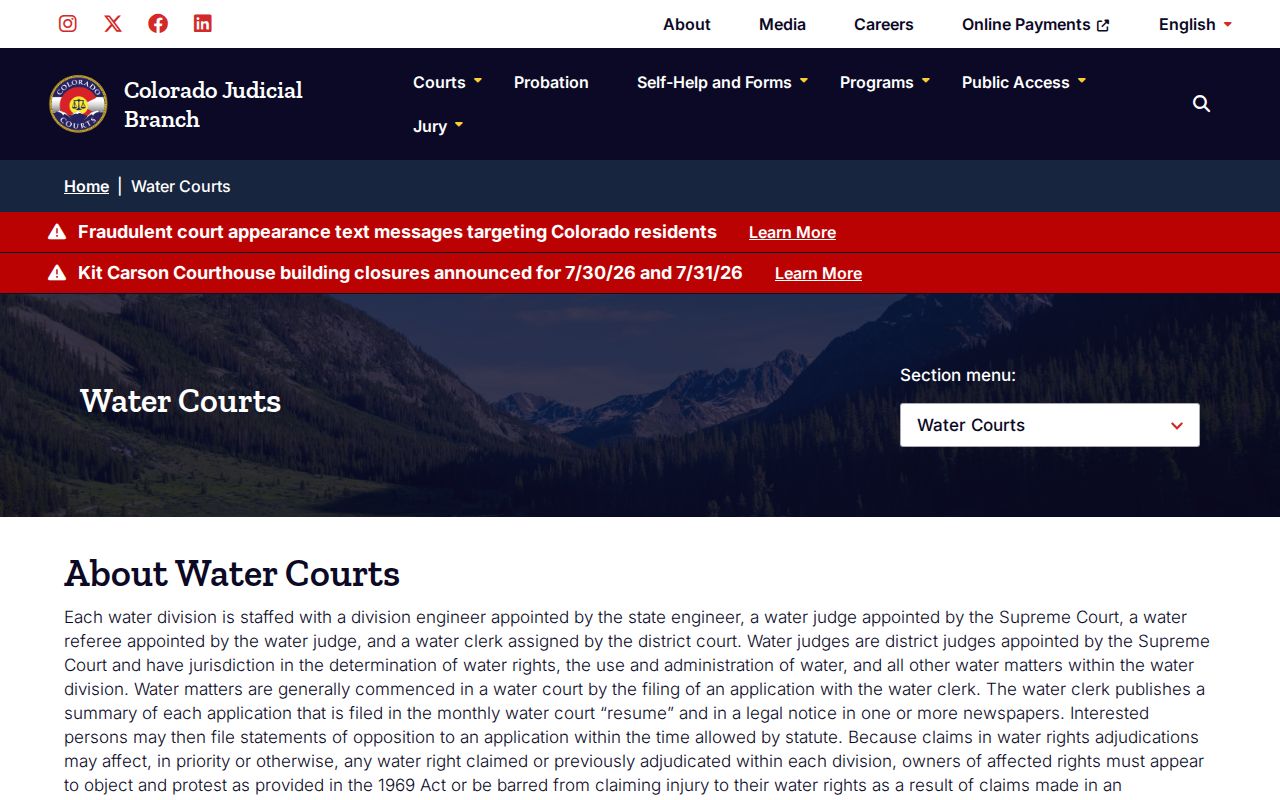
If an estate includes water rights, the probate case, recorded land documents, and any water-court history may need to be checked separately.